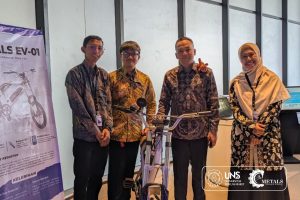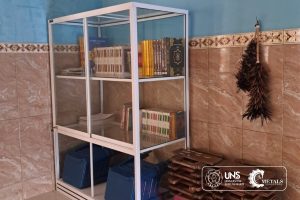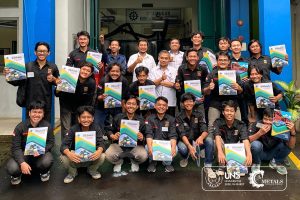
SURAKARTA – A team of lecturers from the Non-Metallic Material Technology and Processing Research Group, Mechanical Engineering Study Program, Sebelas Maret University (UNS) Surakarta, designed and built a sorted waste bin with a steel frame for the Fatimah Ar Royyan Mosque in Jongkang, Karanganyar. This simple innovation not only makes the mosque environment cleaner but also opens a new source of income for the mosque’s fund. This community service activity was initiated by Prof. Wijang Wisnu Raharjo along with four of his colleagues, namely Prof. Kuncoro Diharjo, Prof. Dody Ariawan, Prof. Wahyu Purwo Raharjo, and Dr. Bambang Kusharjanta, under the Community Partnership Program-Research Group Grant (PKM HGR-UNS) scheme.
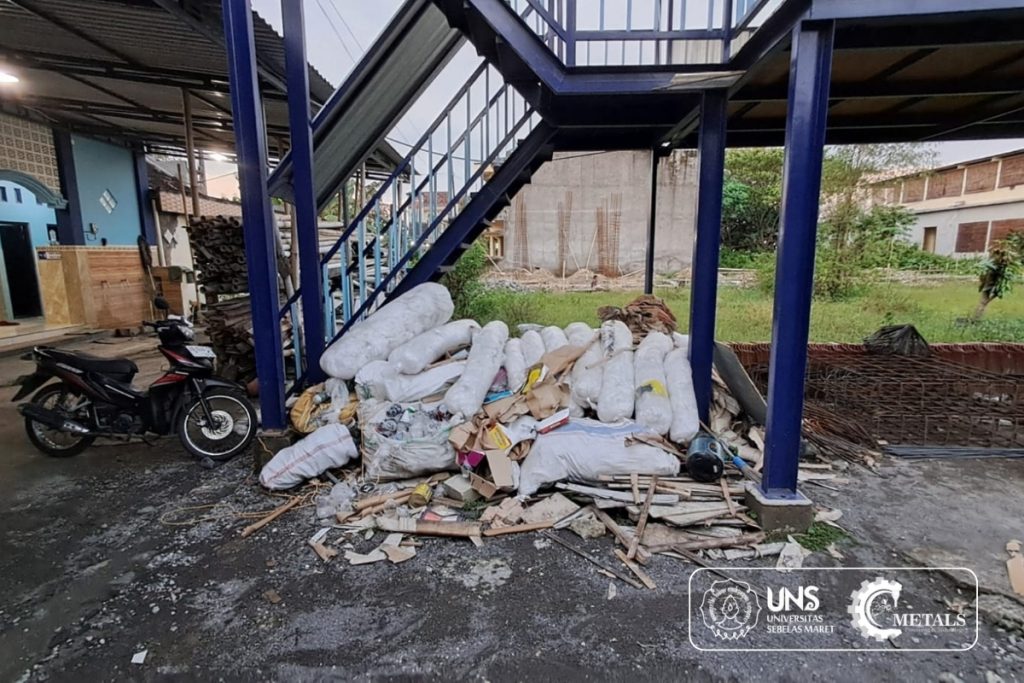
Fatimah Ar Royyan Mosque is not just a place of prayer; this mosque has a highly active schedule, accommodating dozens to hundreds of worshipers and housing three educational institutions simultaneously. The high intensity of these activities is directly proportional to the volume of inorganic waste produced, which unfortunately was still managed conventionally. To address this issue, the UNS team designed a waste bin with a capacity of approximately 2 cubic meters, utilizing a welded angle iron frame and steel mesh walls. Once completed, the bin was installed at a strategic point in the mosque environment, accompanied by a brief socialization for the congregation regarding its function and usage.
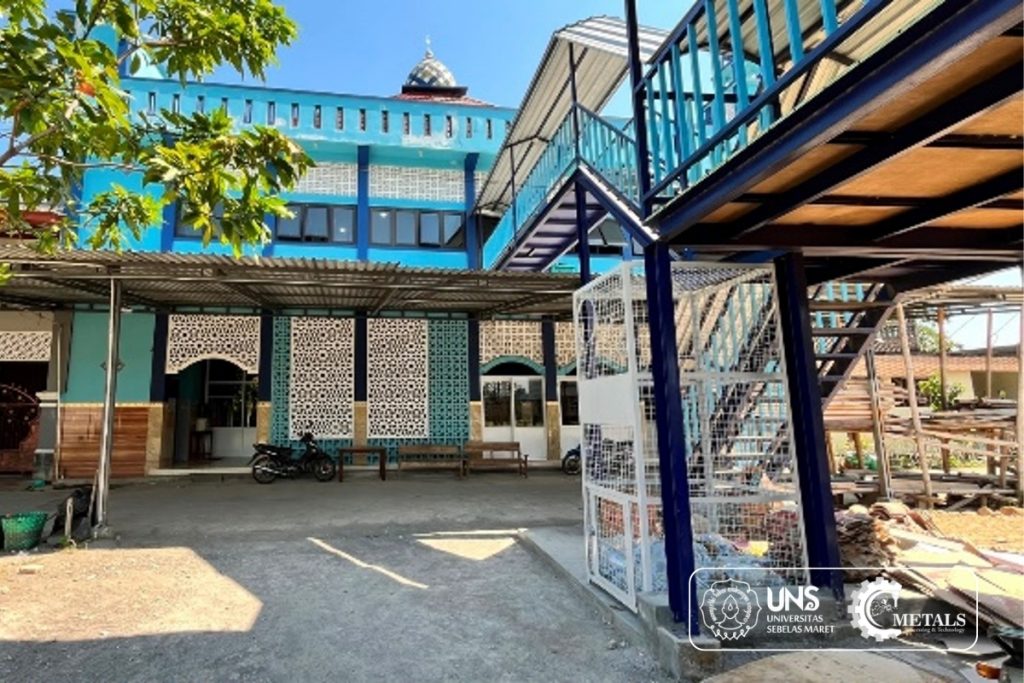
Photo caption: Installation of the sorted waste bin (2 m x 1 m x 1 m) in the mosque environment. This facility is designed to optimize the management of plastic waste into a source of income for the mosque’s fund.
During the mentoring period, the team noted that the bin is routinely filled to capacity in an average of three days. The collected plastic waste is then distributed to waste collectors with a selling value of Rp100,000 per full bin. Assuming the bin is filled approximately 10 times a month, there is a potential additional income for the mosque’s fund of around Rp1,000,000 every month. These funds can potentially be allocated to support cleaning costs, facility maintenance, and other socio-religious activities at the mosque, thereby helping to strengthen the financial independence of the mosque’s management.
Besides the economic benefits, the presence of this sorted waste bin also changes the congregation’s habits to be more organized, as a clear disposal facility is now available. Moving forward, the team suggests adding bins for organic and paper waste categories so that the full economic and environmental potential of the mosque’s activities can be comprehensively optimized.
This program serves as a great example of how a mosque’s function can be expanded—not only as a center of worship but also as a center for environmental education and a driver of community-based economic independence.